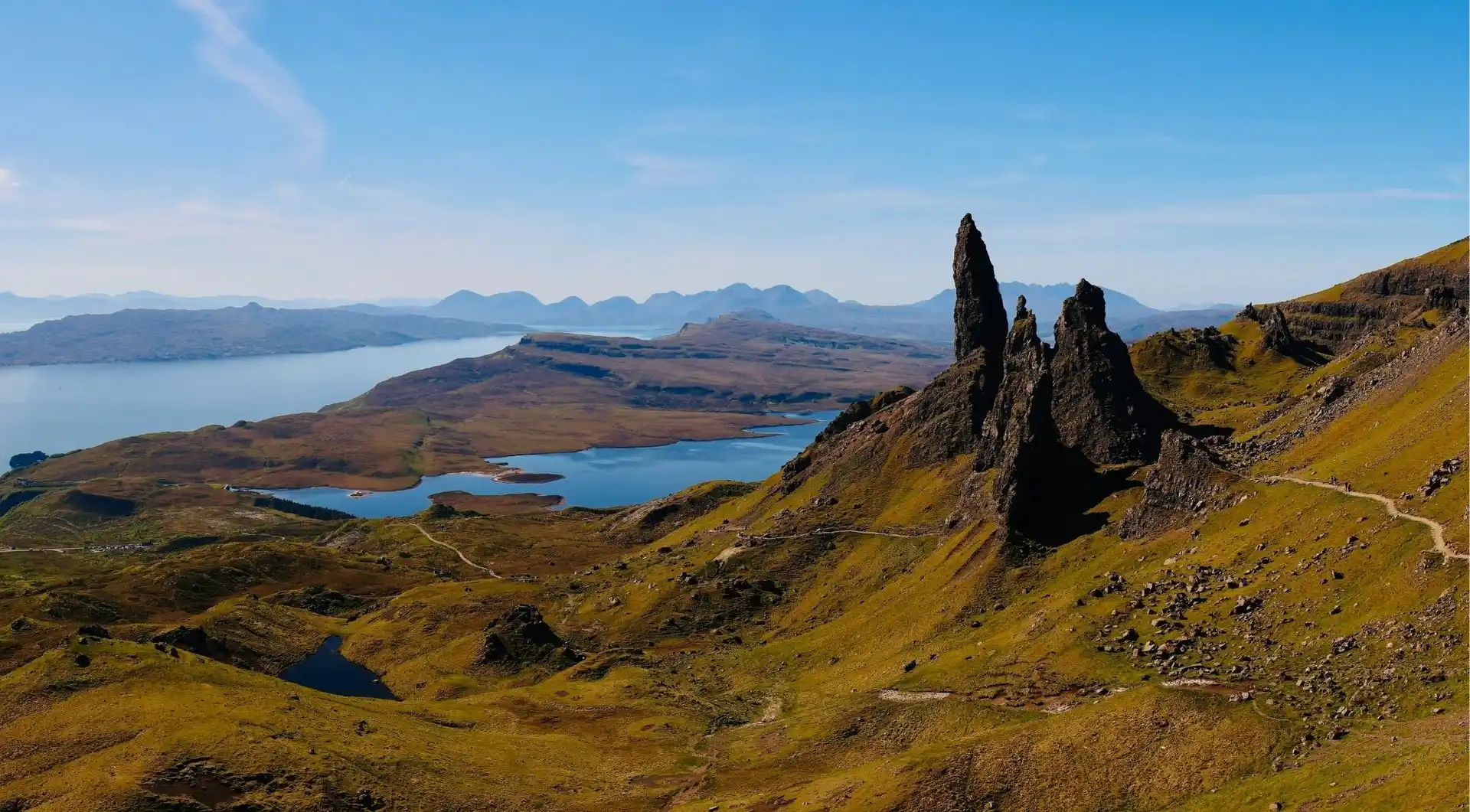
A self-drive tour of Scotland puts you in full control of your itinerary. Want to spend an extra hour at Glencoe because the light is perfect? Skip a stop that doesn't interest you? Take a detour down an unmarked coastal road? All of that is possible when you're not tied to a coach schedule. It's the best option for travellers who value spontaneity and don't mind the responsibility of driving unfamiliar roads.
What Driving in Scotland Is Actually Like
Driving in Scotland falls into two very different categories — the main roads, and the Highlands proper. Most visitors handle the first without issue and need some preparation for the second.
- Motorways and A-roads: Straightforward and well-maintained, similar to driving anywhere else in the UK. Most of the driving between Edinburgh, Glasgow and Inverness falls into this category.
- Single-track roads: Once you head into the more remote Highlands and onto Skye, you'll encounter single-track roads with passing places — pull-offs where you stop to let oncoming traffic through, or to let faster traffic overtake you. These require a different mindset: slower speeds, constant awareness, and courtesy toward other drivers. Most visitors adapt within a day.
- Left-hand driving: The UK drives on the left. If you're used to right-hand traffic, budget extra time to acclimatise — particularly before tackling narrower Highland roads and the Skye Bridge approach.
Other Experiences You Might Enjoy
Scotland's best self-drive routes thread through some of the most dramatic scenery in the UK. Popular stops include the glacial valley of Glencoe, the Glenfinnan Viaduct on the Road to the Isles, Eilean Donan Castle near Dornie, the Isle of Skye Trotternish Loop — Old Man of Storr, the Quiraing and Portree — Loch Ness and Urquhart Castle, Culloden Battlefield and the wild north coast of the NC500. Browse live tours and experiences at these destinations below.
Popular Self-Drive Routes in Scotland
The North Coast 500 (NC500)
Scotland's answer to Route 66 — a 516-mile loop starting and ending in Inverness that circles the dramatic northern Highlands coastline. It typically takes 5–7 days and passes through some of the most remote, spectacular scenery in the UK: Torridon, Applecross, Durness, John o'Groats and the far north coast. The NC500 has become enormously popular in recent years, which means some sections get congested in peak summer — mid-week and shoulder season travel tends to work better.
Edinburgh to the Isle of Skye
The classic 3-day self-drive route: Edinburgh through Glencoe and Fort William on day one, Eilean Donan Castle and the Skye Bridge at the end of day one or early day two, a full day on the Trotternish Loop on day two, and Loch Ness and Culloden on the return. Our dedicated Edinburgh to the Isle of Skye guide covers the route, distances and road conditions in detail.
The Skye Trotternish Loop
Once you're on the island itself, this circular route covers the Old Man of Storr, the Quiraing, Kilt Rock waterfall and the Fairy Pools in a single full-day drive. It's one of the most rewarding half-day or full-day drives in the UK — though car parks at the most popular spots (Old Man of Storr, Fairy Pools) fill early in summer, so an early start makes a significant difference.
The Argyll Coastal Route
A quieter alternative running along Scotland's west coast through Argyll, past Loch Lomond and Oban, offering sea lochs and island ferry connections without the crowds of the more famous Highland routes. Works particularly well as the return leg of a Skye loop, giving a completely different view of the west coast on the way back south.
Glencoe and the Road to the Isles
The stretch from Glasgow through Loch Lomond, Glencoe and Fort William to the Glenfinnan Viaduct and Mallaig is one of the most scenic drives in the UK — and one that most visitors to Skye travel at least one way. Taking it slowly, with stops at the Glencoe Visitor Centre, Rannoch Moor viewpoints and the Glenfinnan Viaduct, adds several hours but is worth every one of them.
Tips for Self-Driving in the Scottish Highlands
- Rent a smaller car if possible. Narrower vehicles are considerably easier to manage on single-track roads and in the historic town centres of places like Portree and Plockton. A compact or small SUV handles most routes comfortably.
- Use passing places correctly. Pull into them on your left to let oncoming traffic through, and never park in one. Driving past a passing place and reversing back is a normal part of single-track road etiquette — don't let it rattle you.
- Fuel up regularly. Petrol stations become sparse in remote Highland areas and on Skye — there are only a handful on the whole island. Don't let your tank run below half when heading into remote areas.
- Book accommodation well ahead in peak season. The Highlands and Skye have limited accommodation, and self-drive travellers who haven't pre-booked can struggle to find rooms May–September, particularly in small villages and on the island itself.
- Watch for wildlife on rural roads. Deer and sheep frequently wander onto roads, particularly at dawn and dusk. Slow down and give them space — deer especially can bolt unpredictably.
- Check conditions before mountain routes. Highland weather changes quickly, and some higher passes (Bealach na Bà on the Applecross peninsula, the A93 through the Cairngorms) can be affected by fog, snow or high winds outside summer. The Traffic Scotland website has live road conditions.
- Download offline maps. Phone signal is patchy in remote Highlands and almost non-existent in parts of Skye. Download maps for offline use (Google Maps, OS Maps, or similar) before you leave a town with good reception.
Self-Drive vs. Guided Tour: Which Is Right for You?
Choose self-drive if you:
- Want full control over your pace and stops — to linger at Glencoe or skip somewhere that doesn't appeal
- Are a confident driver comfortable with left-hand driving and unfamiliar road types
- Want to explore beyond the standard tour routes — the NC500, the Applecross peninsula, the remote outer islands
- Are travelling as a couple or small group where car rental cost is reasonable per person
Choose a guided tour if you:
- Would rather relax and watch the scenery without navigating or worrying about single-track roads
- Are travelling solo (guided tours are usually cheaper per person for solo travellers)
- Are unfamiliar with left-hand driving or nervous about narrow Highland roads
- Want expert commentary and historical context — clan stories, geology, filming locations — that a guidebook or podcast can only approximate
- Are visiting in peak season and don't want to fight car parks at the Fairy Pools or Old Man of Storr
For a full look at the best guided options — day trips from each city and 3-day Highland loops — see our Isle of Skye tours guide and our 3-day Skye itineraries guide.
Sample Self-Drive Itinerary: 7 Days Around Scotland
A week gives you enough time to cover the Highlands and Skye comfortably without rushing. This itinerary starts and ends in Edinburgh and takes in the main highlights:
- Days 1–2: Edinburgh, then drive to Glencoe. Spend a day in Edinburgh before heading north through Loch Lomond and the Trossachs. Overnight near Glencoe — the valley itself is unforgettable at sunrise or in fading light.
- Days 3–4: Isle of Skye (two nights). Drive the Road to the Isles — past the Glenfinnan Viaduct and Eilean Donan Castle — and onto the island. Two nights in Portree or the Trotternish area gives you one full day for the Trotternish Loop (Old Man of Storr, Quiraing, Kilt Rock) and a second day for the Fairy Pools and the western coast.
- Day 5: Skye to Inverness via Eilean Donan. Drive off the island, take your time at Eilean Donan Castle (worth more than a quick photo stop), and reach Inverness in the afternoon.
- Day 6: Loch Ness and Culloden Battlefield. A relaxed day from Inverness — a Loch Ness cruise and Urquhart Castle in the morning, then Culloden Battlefield in the afternoon. Both are short drives from the city.
- Day 7: Return to Edinburgh via the Cairngorms. Drive south through the Cairngorms National Park — Aviemore, Kingussie, Pitlochry — before the final stretch down to Edinburgh through Perthshire.
For a shorter version, our 3-day Isle of Skye itineraries guide covers the condensed loop from each starting city.
Self-Drive Scotland: Common Questions
Is it hard to drive in Scotland if I'm not used to left-hand traffic?
It takes some adjustment, but major roads are well-signposted and broadly similar to driving anywhere else in the UK. The bigger challenge for most overseas visitors is single-track roads in the remote Highlands and on Skye — narrower, slower, and requiring a different driving mindset. Most visitors adapt within the first day.
Do I need a 4x4 to drive around Scotland?
No — a standard car handles the vast majority of Scottish routes in typical conditions, including the NC500 and the road to Skye. A 4x4 is only useful for winter travel on higher, more remote passes that may see snow or ice.
How long should I budget for a self-drive Highlands and Skye trip?
A week is a comfortable minimum for covering the Highlands and Skye without feeling rushed. Four to five days works if you focus on fewer destinations. The 3-day Edinburgh-to-Skye loop is the most popular short self-drive itinerary — see our 3-day itineraries guide for a detailed breakdown.
Is self-driving cheaper than a guided tour?
It depends on group size and trip length. Solo travellers often find guided tours cheaper per person; groups of 3 or more splitting a rental car can find self-driving more cost-effective, especially over longer trips. Don't forget to factor in fuel, parking fees and accommodation (which guided tours base in Inverness for you).
Do I need to pre-book accommodation for a self-drive Scotland trip?
Yes — especially May to September. The Highlands and Skye have limited accommodation capacity, and popular areas like Portree, Glencoe and Torridon book up months ahead of peak season. Last-minute rooms in summer are genuinely hard to find, particularly on busy weekends. Book ahead.