Last checked: October 2026. The tour links on this page are affiliate links: if you book through them we may earn a small commission, at no extra cost to you. The kit advice isn't sponsored, and we don't link to any shop. We only list kit types we'd pack ourselves.
Most people who are miserable on Skye in winter didn't pick the wrong month. They packed for "cold" when Skye was going to give them "wet, windy and dark by four". Temperatures rarely fall far below freezing near the coast, but rain blows in sideways off the Atlantic, paths turn to bog or sheet ice, and the light goes early. Pack for that and the island is wonderful in winter.
This checklist covers what to wear, what to carry and what to leave at home for a Skye trip between November and February. If you're still deciding whether to go, start with Isle of Skye in November: is it worth it? or our guide to the Isle of Skye in December.
Quick Checklist: the 10 Things You Can't Skip
- Waterproof jacket with a proper hood and taped seams
- Waterproof overtrousers
- Insulated jacket, ideally synthetic
- Merino or synthetic base layers
- Waterproof walking boots with a grippy sole
- Warm hat, buff and two pairs of gloves (liner and waterproof)
- Head torch with spare batteries
- Microspikes for icy paths
- Power bank and offline maps
- Travel insurance that covers weather disruption
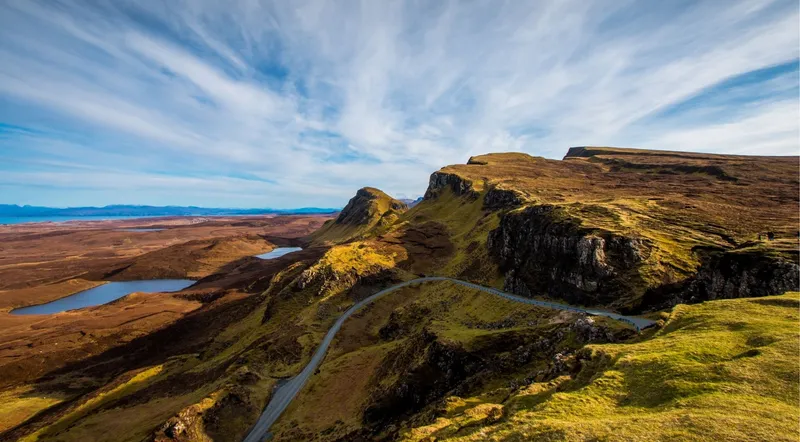
The calendar above is Rabbie's Isle of Skye and Eilean Donan Castle Tour from Inverness, a small-group day trip that runs through the winter. On a tour you spend most of the day in a warm minibus and get out at short viewpoint stops, so the jacket, hat, gloves and grippy boots on this list matter most, and you can leave the car kit at home.
What the Weather Is Really Like (November to February)
These are Met Office long-term averages (1991–2020) for the Skye: Lusa climate station in the south-east of the island. Daylight is for Portree.
| Month | Average high | Average low | Average rainfall | Days with 1mm+ rain | Daylight (Portree) |
|---|---|---|---|---|---|
| November | 9.7°C | 4.4°C | 210mm | about 21 | about 9h on 1 Nov, about 7h10m by 30 Nov |
| December | 7.5°C | 2.4°C | 241mm | about 22 | about 6h37m at the solstice (21 Dec) |
| January | 7.4°C | 2.4°C | 241mm | about 21 | about 6h45m on 1 Jan, about 8h by 31 Jan |
| February | 7.8°C | 2.2°C | 185mm | about 19 | about 8h15m–8h25m on 1 Feb |
The Prabost station, near Portree in the north, comes out a little cooler: about 8.9°C / 3.9°C in November and 7.0°C / 2.0°C in December.
What those numbers mean in practice:
- It's the wet that gets you, not the cold. Over 200mm of rain a month falls in November, December and January, so waterproof trousers aren't optional.
- Wind chill is real. A 7°C day in a 30mph wind on the Quiraing feels well below freezing. Check the MWIS Northwest Highlands forecast, which covers Skye and gives a "how cold?" figure for the tops.
- Frost and ice are common; deep snow at sea level isn't. Lusa averages around 7–8 air-frost days a month from December to February. Paths and single-track roads can be glazed with ice even when the hills look green.
- Sunsets come early. In mid-December the sun sets around 15:40 in Portree. Start a walk at 13:00 and you'll finish it in the dark.
- Midges are gone. Midge season runs roughly from late May to September, occasionally into October in mild years, and by November they've disappeared. Ticks are much less active too, though they can wake up in a mild spell, so do a quick check after walking through long grass or bracken.
Other Experiences You Might Enjoy
Guided winter tours of the Isle of Skye leave from Inverness and Edinburgh, with stops at the Old Man of Storr, Kilt Rock, the Fairy Pools, Portree and Eilean Donan Castle, and multi-day trips through Glencoe and along Loch Ness. Browse live options below.
The Layering System, Explained Simply
Forget one massive coat. On Skye you'll go from a warm car to a hailstorm to a cosy café in an hour, so you need layers you can add and remove.
- Base layer: a merino or synthetic long-sleeve top, plus leggings on cold days. It moves sweat away from your skin. Avoid cotton, which stays wet and chills you.
- Midlayer: a fleece or light wool jumper for warmth while you're moving.
- Insulation: a puffy jacket for stops, viewpoints and aurora-watching. Synthetic fill keeps you warm when damp, which suits Skye better than down. If you prefer down, choose a water-resistant treated fill and keep it under your shell.
- Shell: waterproof jacket and overtrousers. Look for a stiffened hood that doesn't blow off, taped seams and a waterproof-breathable membrane, and make sure the trousers have ankle zips so they go on over boots.
The Full Skye Winter Packing Checklist
Clothing
- Waterproof jacket (hood, taped seams)
- Waterproof overtrousers
- Synthetic or treated-down insulated jacket
- 2–3 base layer tops and 1 pair of base layer leggings
- Fleece or wool midlayer
- Quick-dry walking trousers (not jeans)
- Warm hat that covers your ears
- Buff or neck gaiter
- Thin liner gloves plus waterproof outer gloves or mitts
- Walking socks: one pair per day, plus a spare in your daypack
- Casual warm clothes for evenings (jumper, dry trousers)
- Pyjamas or a warm layer for chilly old cottages
Footwear and traction
- Waterproof walking boots, worn in before the trip
- Gaiters for boggy paths (the Fairy Pools, Neist Point, anything off the main tracks)
- Microspikes for icy paths
- Comfortable indoor shoes or slippers (many B&Bs and cottages are shoes-off)
- Waterproofing spray or wax for boots if you're staying a week
Daypack and walking gear
- 20–30 litre daypack with a rain cover, or a liner or dry bags inside
- Head torch and spare batteries
- Walking poles (very useful on muddy descents at the Storr and the Quiraing)
- Flask for a hot drink, plus snacks
- Offline maps: OS Maps app downloads, or paper OS Explorer sheets 408 (Trotternish & the Storr), 410 (Portree & Bracadale) and 411 (Cuillin Hills). Sheet 407 covers Dunvegan and Waternish, and 412 covers Broadford, Kyleakin and Armadale
- Whistle and a small first aid kit
- Sit mat (it stops wet rock soaking through on lunch stops)
- Spare warm layer and spare gloves in a dry bag
Electronics and photography
- Power bank (cold drains batteries fast)
- UK plug adapter: Type G, three square pins
- Lens cloths, plural, for rain and sea spray
- Camera rain cover, or a simple shower cap over the camera
- Spare camera batteries kept in an inside pocket
Car kit (if you're self-driving)
Read driving on Skye in winter before you go. Mobile signal is patchy and help can be a long way off.
- Ice scraper and de-icer
- Screenwash (salt spray and grit blur windscreens fast)
- Blanket or spare sleeping bag
- Snacks and water
- Torch
- Phone charging cable for the car
- A hire car booked early, as winter fleets are small
Northern Lights night kit
Aurora-watching means standing still in the cold, often for hours. Our guide to the Northern Lights on the Isle of Skye covers where and when to look.
- Tripod or phone clamp
- Red-light head torch (it keeps your night vision)
- Your warmest layers: insulated jacket, hat, gloves, even overtrousers to block the wind
- Spare batteries kept warm in an inside pocket
- Hand warmers and a hot drink
Documents and money
- Passport, and a UK ETA if you need one (see the FAQ)
- Driving licence (and any card or code your hire company asks for)
- Booking confirmations saved offline
- Travel insurance details, including weather disruption cover
- A bank card that works abroad, plus some cash. Most places take card, but the odd B&B, honesty box or small café may not
Toiletries and medicines
- Prescription medicines, enough for possible delays (ferries and roads can be disrupted)
- Lip balm and a rich hand cream (wind and cold crack skin)
- Blister plasters
- Painkillers and any personal basics. Pharmacies are mainly in Portree and Broadford
Evening and festive wear
Skye is relaxed, and nobody expects a jacket and tie in a pub. Smart-casual is enough for most hotel restaurants, and a clean jumper and dry trousers will see you through nearly everywhere. If you're booked into a hotel for Christmas or Hogmanay dinner, pack one nicer outfit and check with the hotel, as a few have their own expectations for gala nights. Bring shoes that aren't your muddy boots.
Do You Need Microspikes on Skye?
Yes, carry them, as long as you know what they're for. Microspikes are chains and short spikes that stretch over ordinary boots. Mountaineering Scotland's ThinkWINTER guidance describes them as designed for icy paths and tracks on low-angle slopes, and warns that they're unsuitable for steep or technical ground where a slip could lead to a serious fall. They are not a substitute for crampons.
On Skye, that makes them useful for:
- The Old Man of Storr path after a frost, when the built path can be glazed with ice
- The Quiraing, where parts of the path are narrow and exposed. If the path is icy and the wind is strong, turn back
- The Fairy Pools, where wet rock, stepping stones and frozen puddles combine
- Car parks, pavements and B&B driveways on frosty mornings
They are not for the Cuillin. In winter the Cuillin Ridge is serious mountaineering terrain that needs crampons, an ice axe and the training to use them, or a qualified guide. The Scottish Avalanche Information Service doesn't forecast for Skye: its six areas are the Northern Cairngorms, Southern Cairngorms, Glencoe, Lochaber, Creag Meagaidh and Torridon, so nobody issues a daily avalanche assessment for the Cuillin. If you're not already a winter mountaineer, enjoy the Cuillin from Sligachan or Elgol.
What Not to Pack
- An umbrella. Skye's wind will turn it inside out within minutes. A good hood does the job better.
- A midge net or midge repellent. There are no midges from November to February.
- Jeans. Once wet they stay wet, heavy and cold. Quick-dry trousers are far better.
- Cotton hoodies as your warm layer. Same problem as jeans.
- Brand-new boots. Blisters on day one will ruin a three-day trip.
- Too many "just in case" outfits. You'll live in the same layers, so spend the space on spare socks.
Sample Capsule List for 3–5 Days (Fits Carry-On)
Wear on the plane: boots, walking trousers, base layer, fleece, insulated jacket.
In the bag: waterproof jacket and trousers, 2 extra base layers, 1 pair of leggings, 1 pair of casual trousers, 1 warm jumper, 4–5 pairs of walking socks, underwear, hat, buff, both pairs of gloves, indoor shoes, microspikes, head torch, power bank, plug adapter, toiletries and medicines.
Liquid de-icer and some camera kit can complicate hand luggage, so buy de-icer locally or rely on the hire car's scraper. If you're bringing a proper tripod or a lot of camera gear, check a bag.
Packing for Different Kinds of Skye Trip
- Joining a tour: you'll spend more time in a minibus and at short-stop viewpoints, so a waterproof jacket, insulated layer, hat and gloves, plus grippy footwear, matter most. Pack the overtrousers anyway. A winter day trip such as Rabbie's Isle of Skye and Eilean Donan Castle Tour returns to Inverness after dark, so keep a dry layer for the ride home. Our guide to Isle of Skye winter tours from Inverness and Edinburgh compares the options.
- Self-drive: add the full car kit above, offline maps and a flask. Our 3-day Isle of Skye winter itinerary helps you plan around the daylight.
- Walking-focused: everything in the full checklist, plus poles, gaiters, a spare insulated layer and a paper map. Check MWIS and the Met Office Northwest Highlands mountain forecast the night before.
- Christmas or Hogmanay: add one smart-casual outfit and confirm opening times in advance, because many places close or shorten their hours. Our list of what's open on the Isle of Skye in winter helps, and if you're planning a dram or two, see the Isle of Skye whisky and distillery guide for winter visitors.
Wherever you're based, a drying room or radiator makes a big difference, so ask about one when you book. Our guide to where to stay on the Isle of Skye in winter lists the hotels that stay open.
Forgot Something? Where to Buy Kit
- Portree: Inside Out, an independent outdoor shop just off Somerled Square, stocks waterproofs, boots, rucksacks and walking poles. Check its winter opening hours before you rely on it.
- Inverness (best if you're picking up a hire car or arriving by train):
- Tiso Inverness Outdoor Experience on Henderson Road, off Longman Road: a large store with boot fitting and equipment hire.
- Mountain Warehouse, on the High Street and at Inverness Retail and Business Park, for budget layers and gloves.
- The city has other outdoor shops too. Check they're still trading before you go.
- Supermarkets in Portree and Broadford sell basics such as de-icer, hand warmers, gloves and snacks.
Winter Safety Basics
- Tell someone your route and when you expect to be back.
- Check the forecast on MWIS (Northwest Highlands) and the Met Office mountain forecast, not just a general weather app.
- Turn around early. Plan to be back at the car well before sunset.
- Know the emergency number: dial 999, ask for Police, then Mountain Rescue. Mountain rescue teams in Scotland, including Skye Mountain Rescue, are volunteers deployed by Police Scotland.
- Register for emergencySMS before you go. Text the word "register" to 999 and follow the replies. The service is designed for deaf, hard of hearing and speech-impaired people, and Scottish Mountain Rescue encourages hillgoers to register too, because a weak signal may be enough for a text when a call won't connect. You must register before you need it.
- Carry a charged phone and a power bank, but don't rely on signal.
Winter Tours If You'd Rather Not Drive
All three run through the winter, and on each one you pack light: a daypack with your shell, a warm layer, gloves and a flask. The first two are long day trips from Inverness; the third spends two nights in Portree.
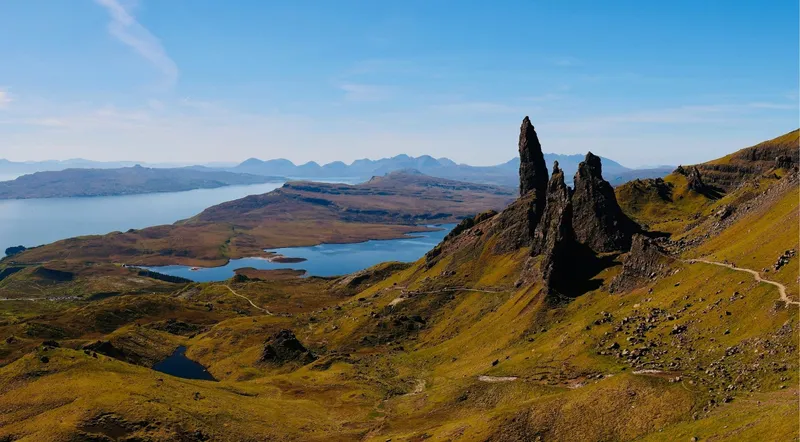
A minibus of up to 16 down Loch Ness and over the Skye Bridge, with lunch in Portree. Stops are short, so a shell, hat and gloves you can pull on in a minute matter more than a big pack.
Check availability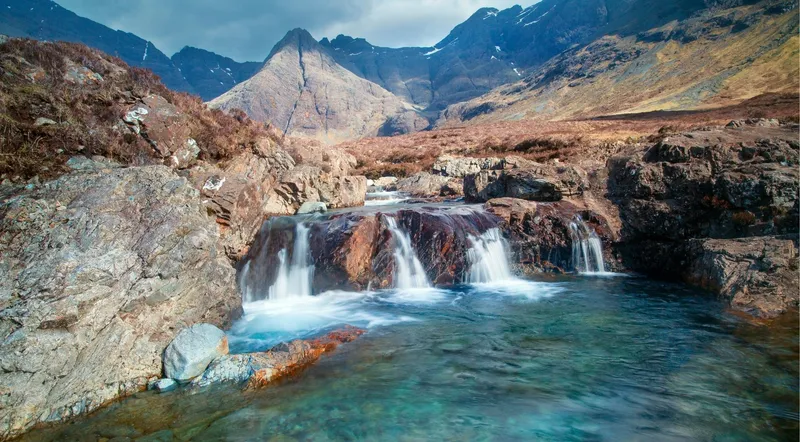
The one that needs proper boots: about 90 minutes on the Fairy Pools path, where gaiters and microspikes earn their space in your bag. In bad weather the guide may swap the walk for another stop.
Check availability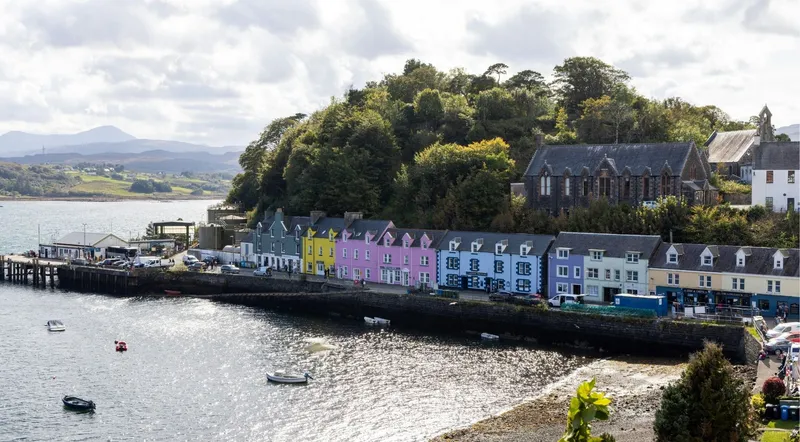
Two nights in Portree B&Bs, so the carry-on capsule list above is all you need, with indoor shoes for the evenings.
Check availabilityWhat to Pack for Skye in Winter: FAQ
What should I wear on the Isle of Skye in November?
Layers: a merino or synthetic base layer, a fleece, a synthetic insulated jacket, and a fully waterproof jacket and trousers on top. Add a hat, gloves and waterproof boots. Average highs are around 9–10°C, but rain and wind make it feel much colder.
Do I need waterproof trousers for Skye?
Yes. November, December and January each average over 200mm of rain, and most of it arrives sideways on the wind. Wet trousers on a cold day are how a nice walk turns into a miserable one.
Are there midges on Skye in winter?
No. Midge season runs roughly from late May to September, occasionally into October. From November to February you can leave the midge net and repellent at home.
Do I need microspikes for the Old Man of Storr in winter?
Not always, but they're cheap insurance. After a frost the path can be icy, and microspikes give you grip on that kind of low-angle, well-made path. If there's deep snow or you're heading onto steeper ground above the pinnacles, microspikes aren't enough.
Is it worth bringing an umbrella?
No. Skye's wind destroys umbrellas. A jacket with a good stiffened hood is far more useful.
What shoes for Skye in winter?
Waterproof walking boots with a deep, grippy sole, worn in before you travel. Trainers soak through on the first boggy path. Bring indoor shoes for your accommodation and a clean pair for evenings.
Do I need an ETA to visit Scotland?
Probably, unless you're British or Irish or already hold a UK visa or immigration status. Most visitors who don't need a visa for short stays, including EU, US, Canadian and Australian citizens, need an Electronic Travel Authorisation, and European nationals have needed one since 2 April 2025. GOV.UK says an ETA costs £20 and lets you stay for up to six months at a time; the Home Office says one ETA covers multiple trips over two years, or until your passport expires if that's sooner. Apply through the official UK ETA app or GOV.UK. Most decisions are quick, but allow three working days, and avoid third-party sites that charge extra.
The Bottom Line
Pack for rain, wind and darkness, and Skye in winter becomes one of the best trips in Scotland. Get the waterproofs, the boots and the head torch right, throw in microspikes and a power bank, and leave the umbrella at home.
Next steps: